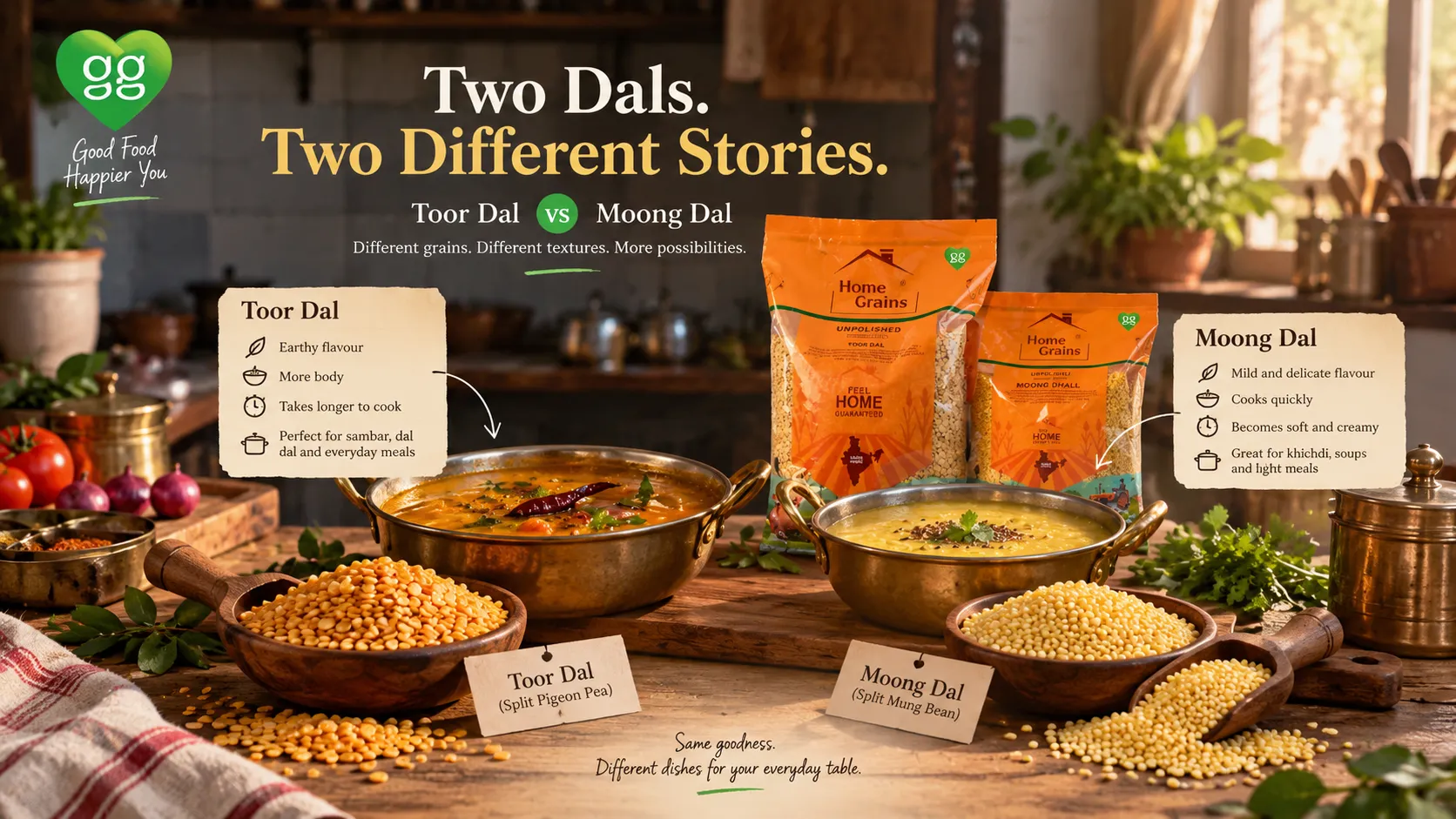
Toor Dal vs Moong Dal: What’s the Difference?
Walk into an Indian kitchen at lunchtime and you may find two familiar yellow dals in the pantry: toor dal and moong dal. At first glance, they can look almost identical. Both are split, yellow, and used in everyday Indian cooking. Yet once they enter the pot, their differences become clear.
One gives a dish a fuller body and earthy flavour. The other cooks quickly and becomes soft and creamy. So, what really separates toor dal from moong dal?
Meet Toor Dal
Toor dal, also known as arhar dal or split pigeon pea, is a familiar ingredient in Indian kitchens. In Tamil, it is commonly called thuvaram paruppu. Its mild, earthy taste and substantial texture make it a natural choice for dishes such as sambar, dal, and dal fry.
Think about a traditional pot of sambar. The dal needs enough body to blend with vegetables, tamarind, and spices while still giving the dish a satisfying texture. Toor dal does exactly that. It usually takes longer to soften than moong dal, although soaking can help reduce cooking time.
Once cooked, toor dal becomes soft without losing as much of its structure as moong dal. That makes it useful when you want a hearty, comforting dal that works well with rice or other everyday meals.
Meet Moong Dal
Moong dal comes from mung beans and is recognised by its small, bright yellow split grains. Its flavour is mild and delicate, while its texture becomes noticeably soft and creamy during cooking.
Because it cooks relatively quickly, moong dal is often chosen for simple meals, khichdi, soups, and light dal preparations. It is convenient when there is little time for lengthy cooking.
Compared with toor dal, moong dal breaks down more easily. This gives the finished dish a smoother texture and a lighter character. The difference becomes easier to notice once both dals are cooked.
Toor Dal vs Moong Dal: The Key Difference
The easiest way to compare toor dal and moong dal is to look at how they behave in a recipe.
Toor dal generally brings more body, a slightly earthy flavour, and a thicker texture. Moong dal is milder, cooks faster, and becomes softer and creamier.
Both are useful sources of plant-based protein and dietary fibre, and both can contribute to a balanced meal. Nutritional values vary depending on variety and whether measured dry or cooked.
So, there is no need to think of one as better than the other. They simply have different roles in the kitchen.
A Simple Kitchen Rule
If a recipe needs a dal with more body and a familiar earthy character, toor dal is a natural option. If you want something mild, soft, and relatively quick to cook, moong dal can be a better fit for that particular meal.
This is what makes Indian cooking interesting. A pantry may contain several dals that look similar, yet each one behaves differently and creates its own texture and flavour.
From the Pantry to the Plate
For families living in Germany, finding familiar Indian ingredients can make everyday cooking feel connected to home. An Indian grocery Germany pantry may include many of the staples used in traditional meals, from dals and oils to snacks and coffee.
Grund Gesund brings together familiar Indian grocery staples for cooking in Germany. Within its range, Home Grains Dal is a natural place to explore pantry essentials that can become part of simple meals at home.
Because sometimes, food memories do not need an elaborate recipe. A warm bowl of dal, the aroma of spices, and a familiar meal on the table can be enough to make an ordinary day feel a little closer to home.