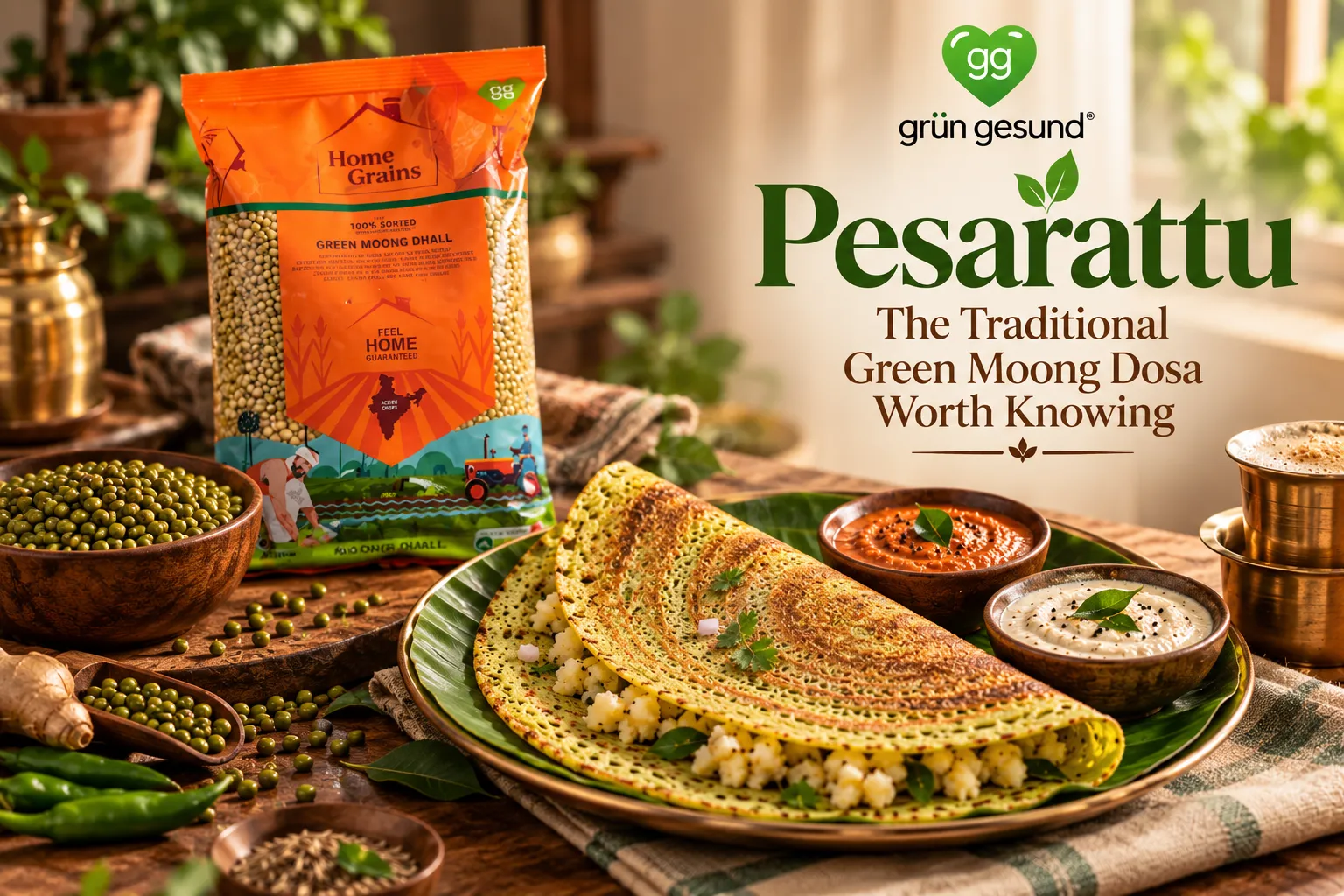
Pesarattu: The Traditional Green Moong Dosa Worth Knowing
The first thing you notice about Pesarattu is its colour. It is green, slightly rustic, and looks quite different from the golden dosa most of us know.
But there is nothing unusual about it. That natural green colour comes from its main ingredient — whole green moong. In Andhra kitchens, this simple ingredient has long been turned into a delicious breakfast called Pesarattu.
The name itself tells part of the story. In Telugu, pesara refers to green gram, while attu refers to a dosa or crepe. Together, Pesarattu simply means a dosa made with green gram. It is especially associated with Andhra Pradesh and is often enjoyed with ginger chutney or even with upma tucked inside.
What makes Pesarattu interesting is how different it is from a regular dosa. There is no need to wait overnight for the batter to ferment. Once the soaked green moong is ground with a few simple ingredients, it is ready to go straight onto the tawa.
And that makes it a lovely dish for a busy morning — simple ingredients, a little preparation, and a warm dosa at the end.
How to Make Pesarattu at Home
Ingredients
- 1 cup whole green moong dal
- 1-inch piece of ginger
- 2 green chillies
- ½ teaspoon cumin seeds
- Salt to taste
- Water as needed
- Finely chopped onion and coriander, optional
- A little oil for cooking
Wash the green moong well and soak it in enough water for about 4–6 hours, or until the beans have softened.
Drain the water and add the soaked moong to a blender. Add ginger, green chillies, cumin and salt. Add a little water and grind until you get a smooth but slightly thick batter.
Unlike regular dosa batter, there is no need to leave this batter overnight.
Step 3: Make the Pesarattu
Heat a tawa and lightly grease it. Pour a ladleful of batter into the centre and spread it gently in a circular motion.
For extra flavour, sprinkle chopped onion, coriander or a little ginger over the top. Add a few drops of oil around the edges and cook until the dosa becomes crisp and golden around the sides.
Fold and serve it hot with ginger chutney, coconut chutney or upma. The classic Andhra combination of Pesarattu with ginger chutney is especially popular.
Perhaps that is what makes Pesarattu so interesting. It does not need a long list of ingredients or complicated cooking. One humble lentil, a few spices and a hot tawa are enough to create something with its own identity.
Grün Gesund
For anyone looking to bring familiar Indian ingredients into an everyday kitchen in Germany, traditional dishes like Pesarattu can begin with something as simple as choosing the right dal.
Sometimes, discovering an old recipe is simply another way of discovering how much can be done with one humble ingredient.