The Journey of a Dal Grain: From Farm to Your Kitchen
Dal is more than just food in an Indian home. It brings comfort, nourishment, and a sense of familiarity that connects generations. It is often a child’s first wholesome meal and the
comforting bowl many turn to after a long and tiring day.
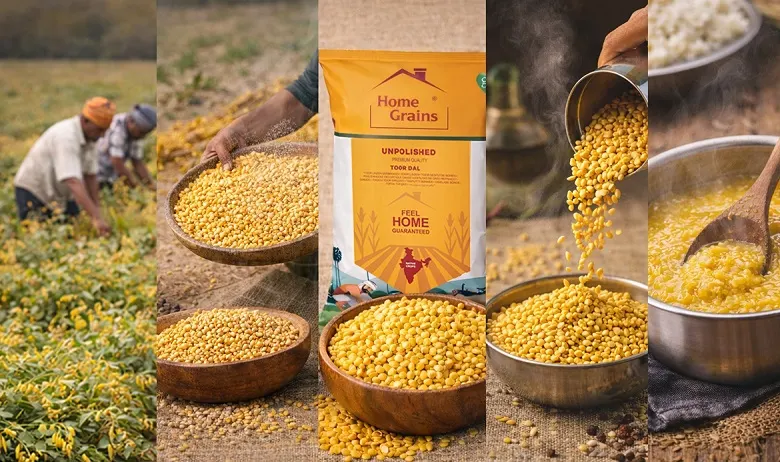
But have you ever stopped to think about the journey each grain of dal takes before it
reaches your plate? Let us explore the story behind it and discover how it travels from the fields to your kitchen.
Where It All Begins: The Soil and the Seed
Every dal begins as a small seed planted in fertile soil by experienced farmers who
understand the rhythm of seasons and nature.
Healthy soil, balanced rainfall, sunlight, and patience all influence the quality of the harvest.
Pulses grow naturally and cannot be rushed. The way they are cultivated directly impacts their protein content, texture after cooking, and natural aroma.
Good dal is the result of careful farming practices rather than mass production.
Harvesting at the Right Time
Once the plants mature, the crops are harvested and dried naturally. This stage requires
precision because improper drying can affect the grain’s strength and quality. At this stage, the dal still carries its protective outer husk, which preserves its nutrients and structure. Careful harvesting ensures that the grains remain strong and suitable for further
processing.
Cleaning and Sorting for Quality
Before dal is processed, it goes through a detailed cleaning and sorting stage. Dust, stones, and unwanted particles are removed, and only well-formed grains are selected. This process ensures consistency and maintains quality standards. Removing damaged or immature grains helps deliver a better cooking experience and a more reliable final product.
Gentle Processing That Protects Nutrition
Processing involves removing the husk and splitting the grain. Traditionally, this step was done slowly to prevent heat buildup.
Why is this important? Excessive heat can affect the taste, texture, and nutritional value of
dal. Carefully processed dal cooks evenly, maintains its natural colour, and feels lighter and easier to digest.
The Value of Unpolished Dal
Many people associate shiny grains with higher quality, but heavy polishing often removes
important natural elements. Over-polishing can strip away fibre, surface nutrients, and the
grain’s authentic character.
Unpolished dals retain their natural outer layer because they are not treated with artificial
polishing methods such as oil coating or chemical colouring. This helps preserve fibre,
protein, and essential nutrients while offering a richer taste and more wholesome texture.
Today, many Indian households living abroad are choosing minimally processed ingredients.
Unpolished dals support balanced nutrition and help recreate the traditional cooking
experience many people grew up with.
Responsible Packaging for Freshness and Safety
After processing, dal is carefully packed to protect it from moisture, pests, and
contamination. Proper packaging helps maintain freshness and ensures that the quality remains intact from storage to delivery. Trust is built when the product reaching your kitchen reflects the same care taken from the
beginning of its journey.
From Pantry to Plate: The Final Step
The journey truly comes alive in your kitchen. Whether cooked in a pressure cooker,
simmered slowly in a pot, or prepared with simple spices like turmeric and salt, dal
transforms into a nourishing and comforting meal.
Every serving carries the effort of farmers, the balance of nature, careful processing, and generations of culinary tradition.
Why Understanding the Journey Matters
When food is rushed or over-processed, its quality and nutritional value can suffer. When it is grown and handled with care, the difference can be felt in both flavour and well-being.
Knowing where your dal comes from helps you make more mindful choices about what you
eat and how it supports your health.
Our Commitment to Quality
We believe in respecting nature’s pace and maintaining authenticity throughout the
process. Our approach focuses on purity, traceability, and traditional standards that align
with real home cooking.
From the fields to your plate, every step is guided by care and responsibility.
Bringing the Taste of Home to Europe
For many Indian students and families living in Germany, Luxembourg, Switzerland, and
across Europe, cooking traditional meals is a way to stay connected to home. Premium
unpolished dal makes it easier to recreate familiar flavours while supporting a healthy
lifestyle.
Simple, authentic, and nourishing, these lentils bring warmth, comfort, and tradition back to
everyday cooking.



 +49 160 8537618
 contact.grungesund@gmail.com